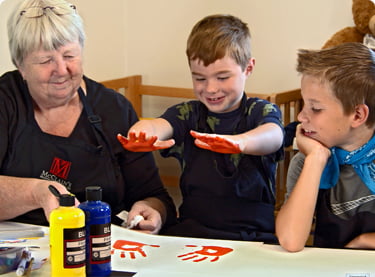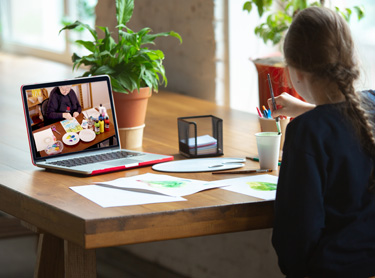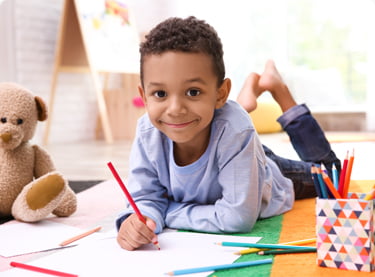

While keeping students engaged can be challenging at times, teachers and researchers have found that having short periods of structured downtime (specifically called brain breaks) throughout the day assists in boosting student mood and focus. When those brief periods are centered around art they give us yet another reason why art literacy is so important in today’s classrooms. Art breaks are essentially brain refreshers for our students.
The Effects of 10-Minute Art Breaks on Student Learning
Art-focused brain breaks give students’ brains a chance to absorb the academic content they’ve just learned, while increasing art literacy. These short breaks are valuable beyond art learning, too.
Everyone that sits for long periods of time, whether engaging in tasks, working or learning, will experience a decreased ability to focus and absorb information. Interspersing these activities with 10 minutes of rest, movement or some type of change ensures that the brain can function optimally. This is why productivity hacks like the Pomodoro Technique include breaks.
For students, this translates into structured 10-minute breaks where they can pause their learning session to let their brains “reset” and increase learning potential. These breaks allow students to rest, socialize, move or learn something else, like art! And just like the breaks themselves, art allows for socialization, better learning outcomes, and confidence boosts in school.
Such pauses give a child’s brain time to process information and store memories, important factors in learning. In studies, the benefits of these breaks include demonstrated improvement in children’s cognitive function, reading comprehension and productivity.
Ideas for 10-Minute Art Breaks That Boost Focus
Brainfacts.org has said, “Brain breaks help children by replenishing attention, improving learning, and boosting creativity.” That creative boost can be harnessed with art-themed 10-minute breaks, tailored to fit any age group.
Create Name Placards
This works great for teachers and students. Depending on age, you can provide students with a small folded “tent card” with their names on it already, or let that be a part of their creation. These small tents give kids a chance to decorate or customize their name, and makes it easy for teachers to identify their students.
Sketching
Ask children to sketch something that comes into their mind based on a word or phrase you give them. Take the pressure off by letting them know it’s for fun, and not meant to be “perfect.”
Coloring Books
Allowing students to color pages in a book (or looseleaf copies) gives them a chance to rest without thinking about their school work.
Class Movie Posters
This will take multiple sessions, but you can break students into teams to create movie posters representing their team or the class. Using poster board, markers, magazines and more, kids can collaborate to create.
Art-Themed Journaling
To encourage journaling, you can give your students a “first line” or question to get started (called a journal prompt). Then encourage them to draw, sketch, use stencils, colors or shading to express their feelings along with a few words. Again, let them know it’s for fun so there’s no grade or pressure.
These 10-minute art breaks give children the opportunity to rest and prepare to readily take in more information afterwards. This further shows us why kids need art—it’s not an afterthought, it is an essential part of learning.
Use Our Free Online Art Lessons for Kids Today
Join parents and educators in the Pacific Northwest and across the country who use our free kids’ online art lessons to help their students in many ways. Review them for 10-minute art break ideas. Golden Road Arts is committed to helping teachers provide arts education to students everywhere.